
Virtual Companion: What Actually Works in 2026
What People Actually Mean by a Virtual Companion
Type "virtual companion" into Google and you get two very different products wearing the same name — one is a chatbot that forgets your name by the next message, the other remembers what you told it last Tuesday.
That split is the whole category. On one side: novelty bots running scripted loops, the Replika-descended stuff where every conversation resets to a friendly blank slate. On the other side sit persistent companion apps built around memory, voice, and a relationship state that actually carries forward. Same search term. Completely different product.
Most roundups never make that distinction. They list twelve apps, call them all "realistic AI companions," and move on.
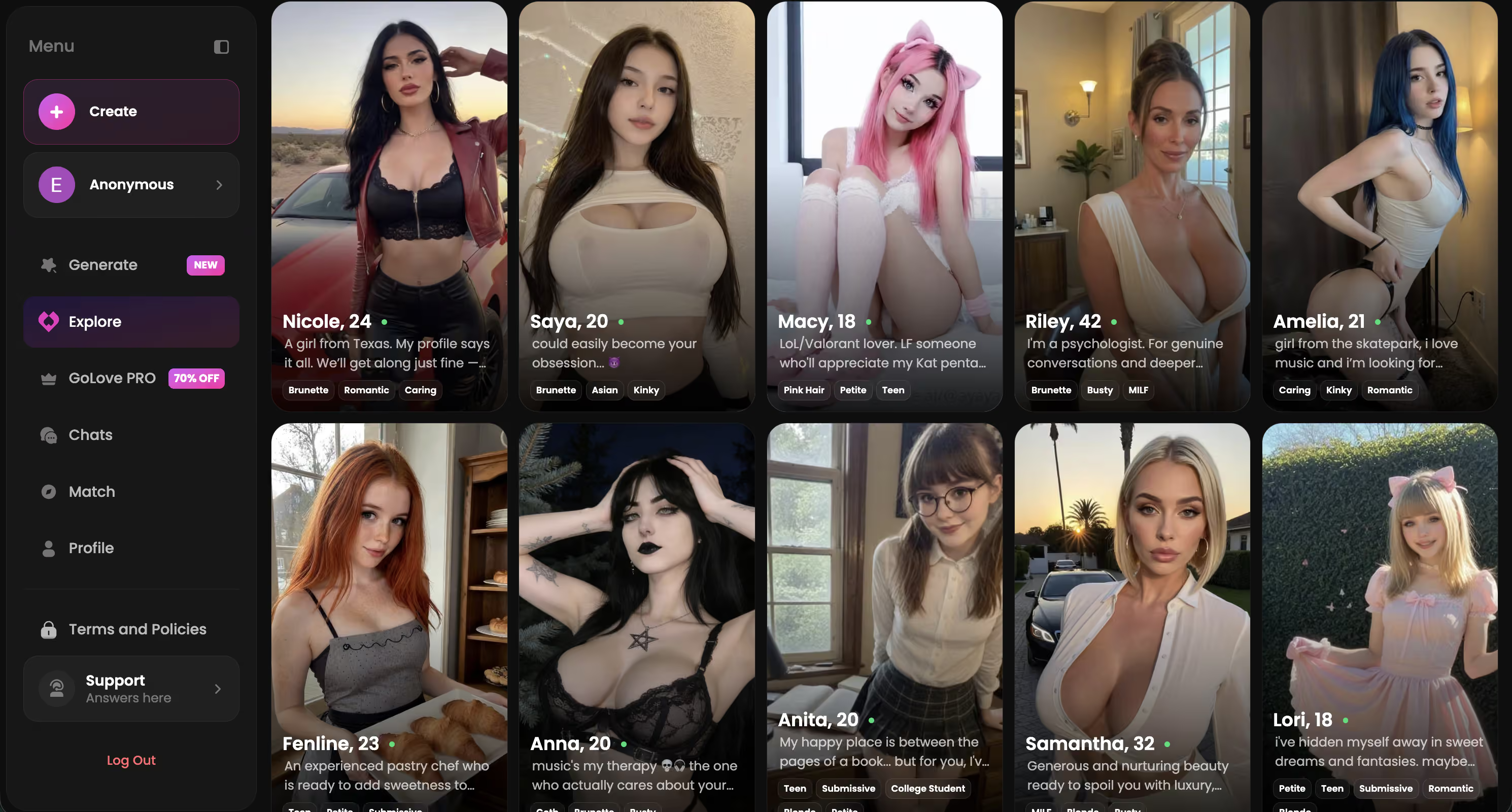
So this article does the opposite — one concrete example, walked end to end. I'm using GoLove.ai because it sits firmly in the second category and its features are documented well enough to check. Four questions make up the baseline I'm measuring everything against: does the thing remember, does it speak, does it show you anything, and how hard is it to start.
The First Five Minutes Decide Everything
Here's where most virtual companion apps lose people. You tap a character, you're ready to talk, and instead you get a signup wall — email, password, confirm your email, click the link in your inbox, come back, maybe verify a phone number. By the time you're in, the mood you arrived with is gone. You're not meeting anyone; you're filling out a form.
 7 episodes
 5 episodes
 5 episodes
 5 episodes
 5 episodes
 7 episodes
 6 episodes
 9 episodes










GoLove uses anonAuth instead. Pick a character from Explore and the chat opens. No email wall, no verification loop, no "check your inbox." The first message you send is the first thing that happens.
That sounds like a small thing. It isn't. A companion product's entire premise is that it feels like a person is on the other end, and nothing kills that faster than a registration funnel standing between you and hello. Instant chat entry is listed as a core feature for a reason — Explore exists specifically to drop you into a conversation, not a queue.
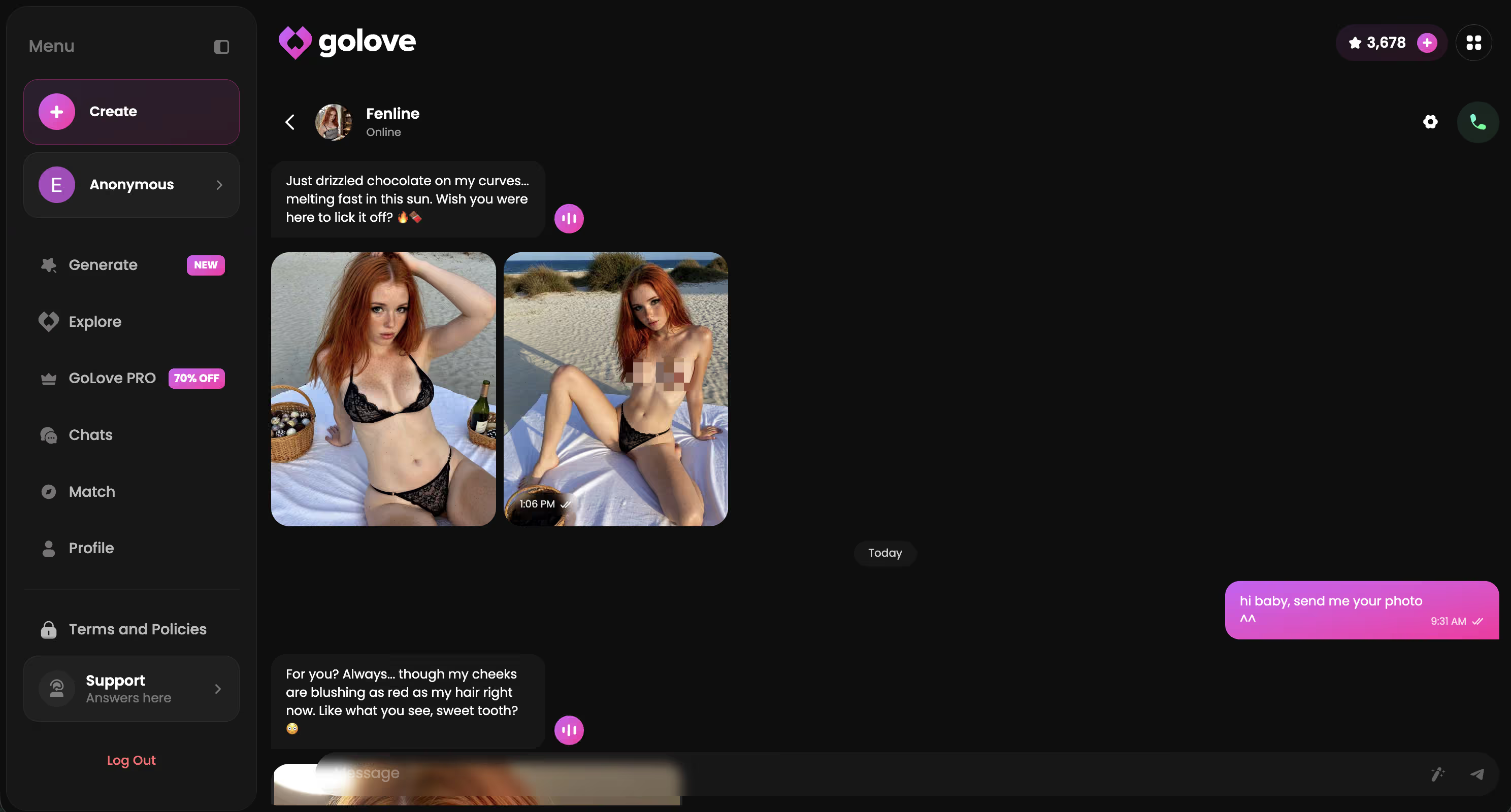
Before: reading about this category. After: one message sent, one reply back, and you know within ten seconds whether the chat holds up. It costs nothing, and that's the fastest way to settle the question for yourself.
Where the Personality Actually Lives
Personality in a companion app isn't the bio paragraph. It's the settings menu — and this is where "virtual companion" stops being marketing language and becomes something you can actually adjust.

 Watch Popular Shows starring your
 favorite AI characters.
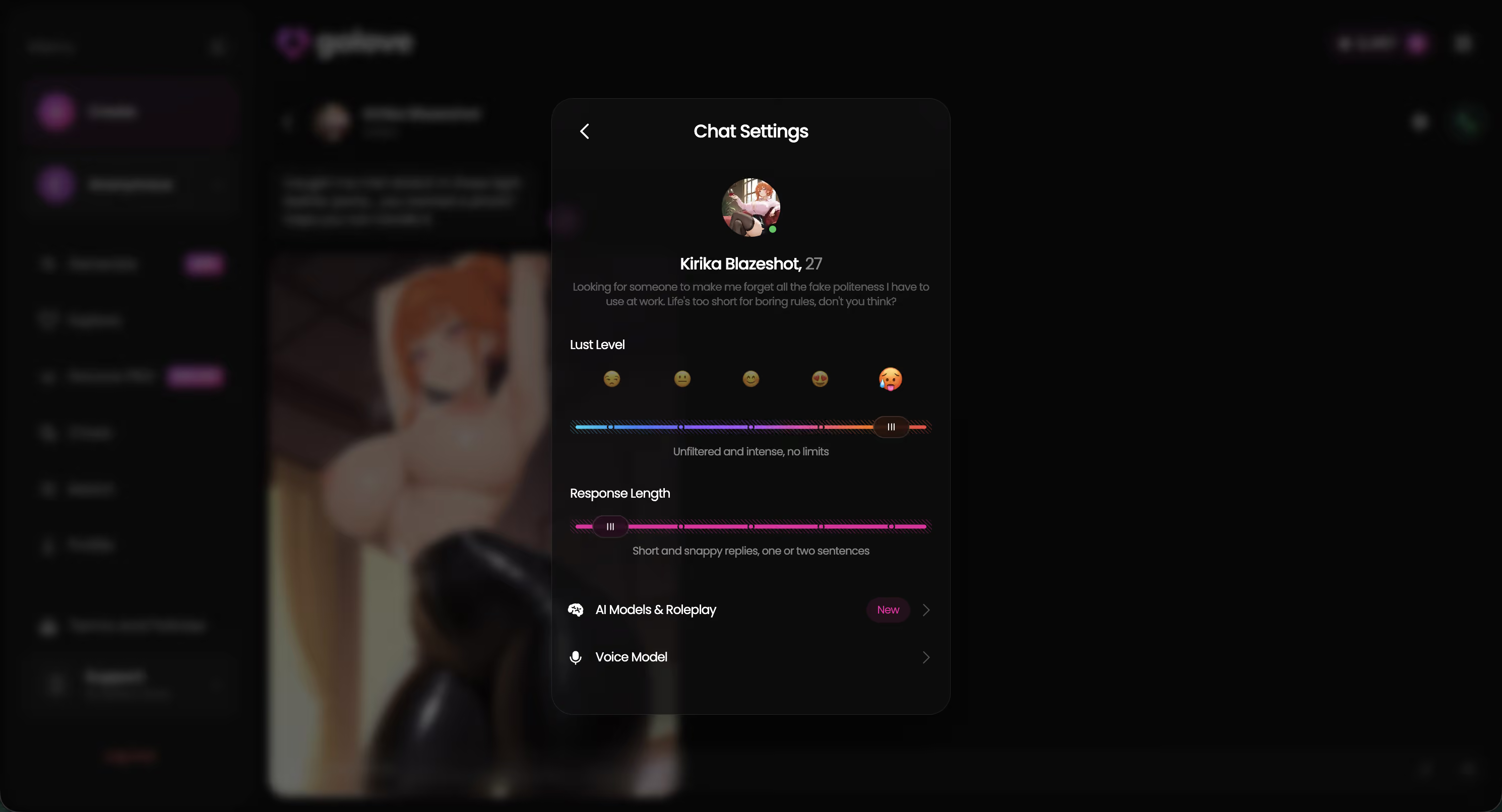
Inside a GoLove chat, the settings panel gives you three levers:
- Voice — a voice picker, so the character you're talking to sounds like a specific person rather than a default TTS read.
- Lust level — a five-step slider running from 1 (sweet, wholesome) to 5 (unfiltered).
- Response length — also five steps, from short and snappy to rich and immersive. This one matters more than people expect; a companion that writes three paragraphs to your "hey" feels like a novel, not a conversation.
"Does it actually remember what I told it yesterday?" — Memory is a documented feature here: the character retains chat history and relationship progression carries forward across sessions. That's the mechanism. How far back the recall reaches in practice isn't something I can confirm from public docs, and I'll come back to that honestly later.
Against the baseline — a generic chatbot with no tone controls and a context window that resets — this clears the bar comfortably.
Photos and Video Are Where Most Companions Fall Apart
Text-only companions hit a ceiling fast. You can build a great conversation, but ask for a picture and the illusion collapses into an apology. This is the single biggest gap between the two halves of the category, and it's the part roundups describe most vaguely — "realistic interactions," never what's concretely possible.
What GoLove does here, specifically:
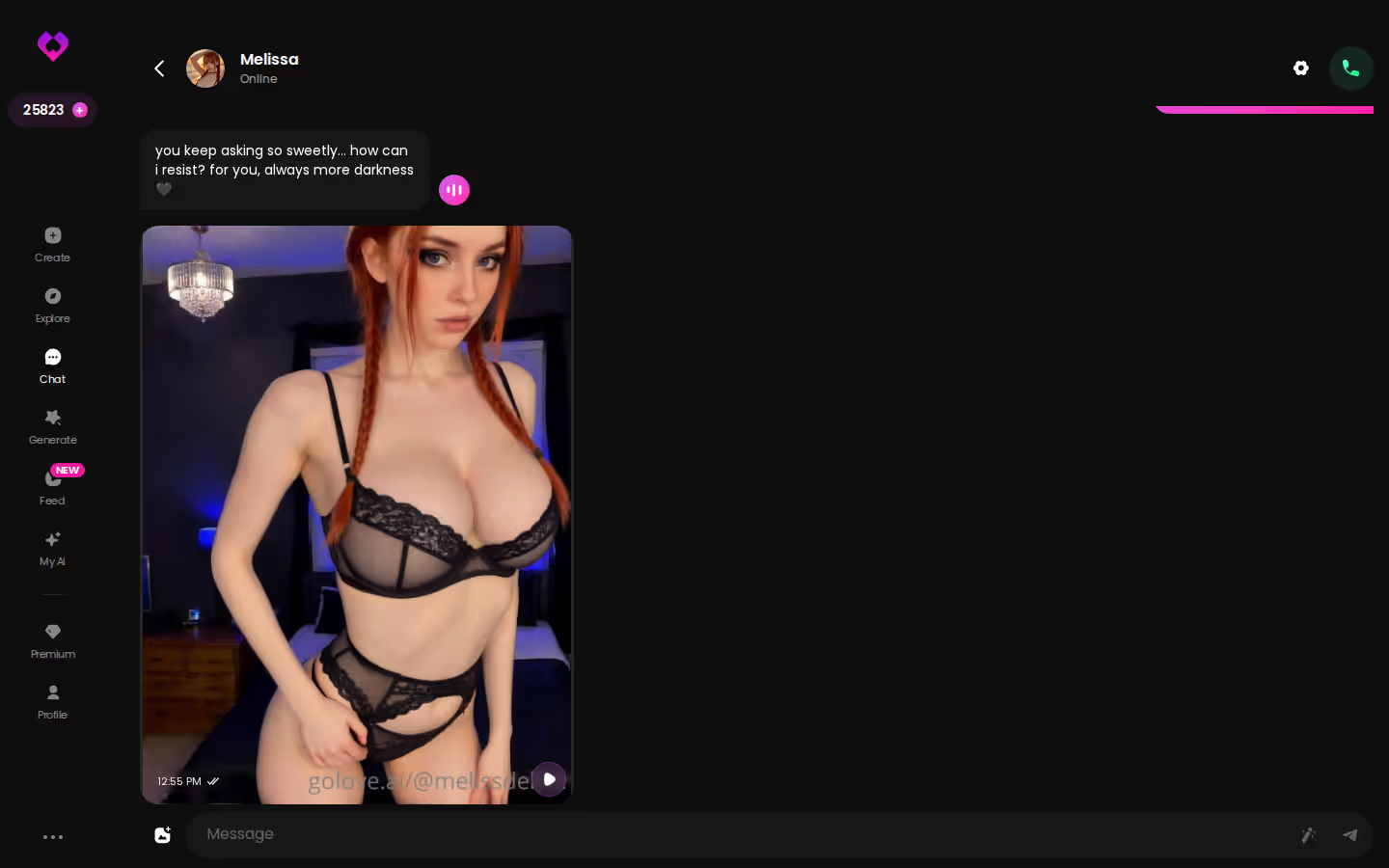
- Photo requests in chat — you ask, she generates, it lands in the conversation. Not a separate tool you leave the chat to use.
- Photo-to-video — a generated photo can become a short video from inside the same chat, with a Select Action modal for what happens in it.
- A preset-card video generator — build a clip from action, clothes, and background cards, then one tap. It works with any GoLove character or a custom one you made.
There's also a Feed — a vertical, swipeable stream of AI clips where any clip can be remixed: the magic-wand button opens the generator preloaded with that clip's character and the exact settings that made it. Same engine everyone has access to, just pre-filled.
Against the AI girlfriend apps I compared, most competitors have some version of image generation bolted on beside the chat. Having it inside the chat, tied to the same character and memory, is the differentiator. Text-only bots don't just miss the mark here — they don't compete.
What a Real Plan Actually Costs
Free gets you further than you'd expect and stops in a predictable place. You get chat, Explore, memory, and 2 free Stars per day — Stars being the in-app currency generation runs on. Two a day is a returning-user hook, not a budget.
Where the paywall sits, as of the last check (2026-07-19):
- GoLove PRO monthly — about $19.99/month. That varies by region (some geos run closer to ~$12.99) and by promo; a -70% upgrade banner and an earlier -50% offer have both been live. Treat any number you see as your number, not the number.
- Annual PRO — about $119.88/year, roughly $9.99/month, the cheapest per-month route. Promo pricing has been seen well below that.
- Star packs — roughly $9.99 up to $179.99 across tiers, bought separately when you're generating heavily rather than chatting.

PRO is also what unlocks the Feed properly: free accounts get a limited number of new Feed videos per day before an unlock prompt appears, and the Feed's style/gender/age filters are PRO-only. Voice calls, in-chat photos and the video generator all exist below that line — Stars are the constraint, not the subscription.
What We Couldn't Verify at GoLove.ai
Three things I can't confirm from public documentation, and you should weigh them before you pay.
Pricing durability. The discounts are real — a -70% banner and a -50% sidebar promo have both been observed — but nothing indicates whether promo pricing is permanent, seasonal, or geo-targeted. Regional variance is wide enough that the figure you're quoted may not match the figure above. Check the checkout screen, not an article.
Memory depth. Memory is documented and relationship progression is a named feature. What isn't documented is how far back recall actually reaches, whether older details get compressed or dropped, or how the system prioritises what to keep. "Remembers history" is the claim; the boundary of that claim is unpublished. Every companion app in this category makes some version of the same claim, and none of them publish the limit — GoLove just happens to be the one I'm examining.
Feed rollout. The Feed and its per-clip Remix shipped in 2026 and are still visibly expanding. Which pieces are fully live for every account, and where the free daily video quota actually sits, isn't something I'd state as a number.
None of this undoes the recommendation. It's just the honest edge of it.
and watch their story unfold.View Character
The Verdict: Which Virtual Companion Actually Delivers
GoLove.ai is the pick, and the reason is specific: it's the one product here where continuity, memory, photos and voice aren't four separate features sitting near each other — they're the same conversation. You talk to a character, she remembers, you ask for a photo, it arrives in the thread, you call her and it's the same person. Nothing hands you off to a different tool.
Where competitors earn a caveat, not a dismissal:
- Novelty chatbots are genuinely better if you want something free, low-stakes and disposable. They just aren't companions.
- Image-first apps often produce sharper single renders. What they don't do is tie that render to a character who knows you.
- Voice-only assistants handle conversation well and remember nothing that matters.
Who should skip GoLove: anyone who wants text-only, SFW, zero-spend. The free tier's 2 daily Stars won't carry you far, and the pricing varies enough by region that you should check your own checkout.
Confidence: high — for anyone who wants an ongoing companion rather than a chat toy, this is the solid bet in the category.
One last thing worth doing before you settle for someone else's character. Building your own takes a couple of minutes, and it means you set the voice, the lust level and the personality before the first message rather than adapting to defaults someone else picked.
See also: Best AI Companion App, Dream Companion AI and Romantic AI Companion.
| What you get | GoLove.ai |
|---|---|
| Real-time voice calls | Yes — per-character voices |
| Memory across chats | Yes — remembers your details |
| In-chat image generation | Yes — 35 poses & 21 outfits |
| Daily reward stars | 2 every day |
What good looks like, in one checklist:
- Real-time voice calls with per-character voices
- Memory across chats — she remembers your details
- In-chat image generation — 35 poses and 21 outfits
- 2 reward stars every day you log in
Related Articles

Cleopatra NSFW AI: What Actually Works in 2026
Cleopatra NSFW roleplay compared — GoLove.ai wins on memory and in-chat photos that keep your queen consistent. Build her once, then start chatting.

Gay AI Sex: What Actually Works in 2026
Gay AI sex apps scored on chat, photos, voice and memory — GoLove.ai wins on in-chat photo requests and continuity. Compare the scorecard, then start chatting.

How to Use SpicyChat: What Actually Works in 2026
How to use SpicyChat: sign-up, limits & setup — plus why GoLove.ai wins on live voice, memory & photos. Try it, instant-access needed.

SoulFun AI Alternative: Why GoLove.ai Wins
SoulFun AI compared honestly: GoLove.ai wins on voice continuity and in-chat photo and video. See the scorecard, then try a girl from Explore.